what are you looking for?
Glass cosmetic bottles are widely used for serums, facial oils, essences, lotions and other skincare products because they can create a premium appearance while providing a strong packaging barrier. However, choosing glass is not simply a design decision. The bottle, closure, pump or dropper, decoration, filling process and shipping method all need to work together as one packaging system.
For buyers, the most useful question is not “Is glass better than plastic?” but “Is this glass package suitable for my formula, brand position and supply plan?” This guide explains the main advantages and limitations of glass cosmetic bottles, what to test before ordering, and how to evaluate a supplier before moving into mass production.
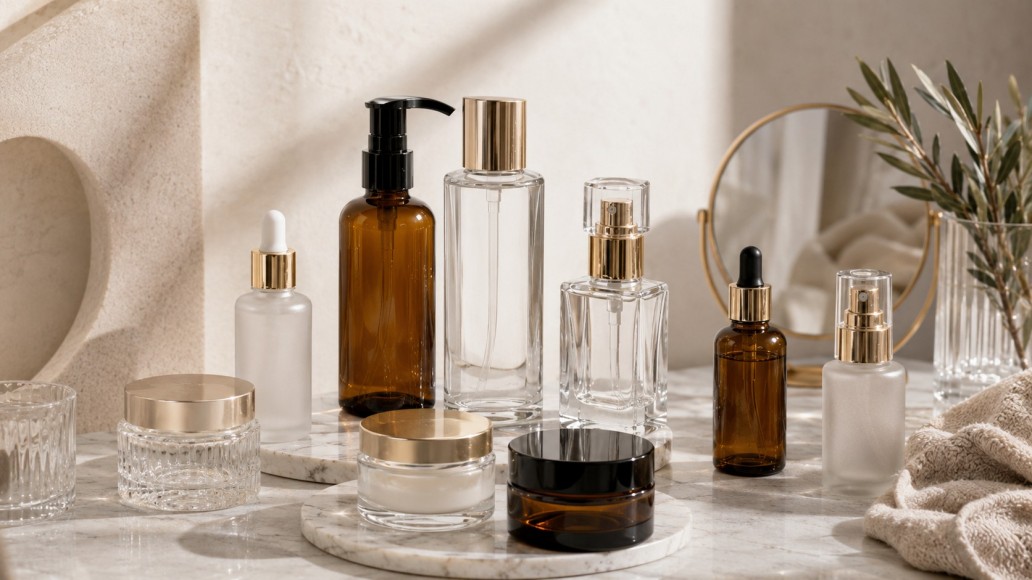
Glass remains a popular choice in beauty packaging because it combines visual quality with practical barrier performance. It can work especially well for brands that want a substantial, refined pack and for formulas that benefit from a low-permeability container. The final result, however, depends on the complete component combination rather than the bottle alone.
Premium Appearance and Brand Positioning
The weight, clarity and surface feel of glass can help a skincare product communicate a more premium position. Clear glass can showcase the formula, while frosted, sprayed, colored or coated finishes can create a softer or more distinctive visual identity. Decoration options such as screen printing, hot stamping and labeling can further support a consistent brand system.
Appearance should still be evaluated on a physical sample. Wall thickness, mold lines, base shape, shoulder design and color can look different in photography than they do under normal retail lighting. If the package will be sold online, request clear product images or sample units so the final appearance can be reviewed before artwork approval.
Glass is non-porous and generally provides a strong barrier against moisture and gas transmission through the container wall. That makes it a useful option for many skincare formulas. Even so, compatibility must be tested with the finished packaging system because the product can also contact a gasket, liner, dip tube, pump, dropper bulb, wiper or other closure component.
Light protection also depends on the bottle design. Clear glass offers visibility but may not be appropriate for every light-sensitive formula. Amber glass, opaque coatings, color sprays or secondary cartons may provide additional light shielding, but the required level should be confirmed through stability and compatibility testing rather than assumed from appearance alone.
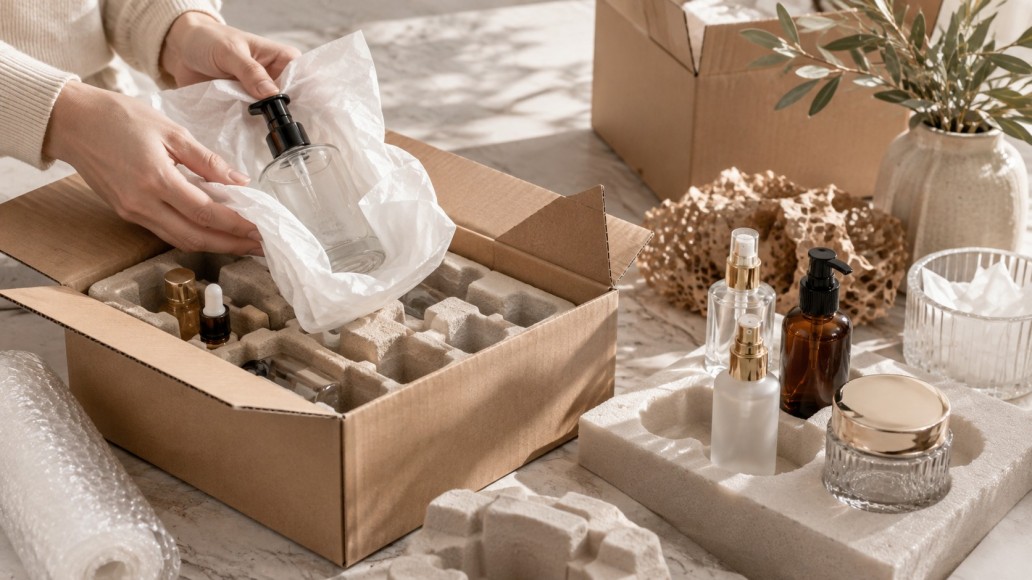
The main trade-offs of glass cosmetic bottles are weight and breakage risk. A heavier pack can increase freight cost, carton requirements and handling effort, especially for international orders or e-commerce fulfillment. Breakage can also occur during production, packing, transportation or consumer use if the bottle is exposed to impact.
Before ordering, review the bottle dimensions, unit weight, master carton quantity, dividers or inner trays, and the supplier’s packing method. For e-commerce or long-distance shipping, test the filled product in the final retail and transport packaging. A bottle that survives a sample shipment without product inside is not enough evidence for a commercial launch.
Sustainability claims also need care. Glass can be recyclable in many markets, but the real environmental result depends on local collection systems, bottle weight, decoration, transport distance and the overall packaging configuration. Avoid broad claims unless they can be supported for the target market.
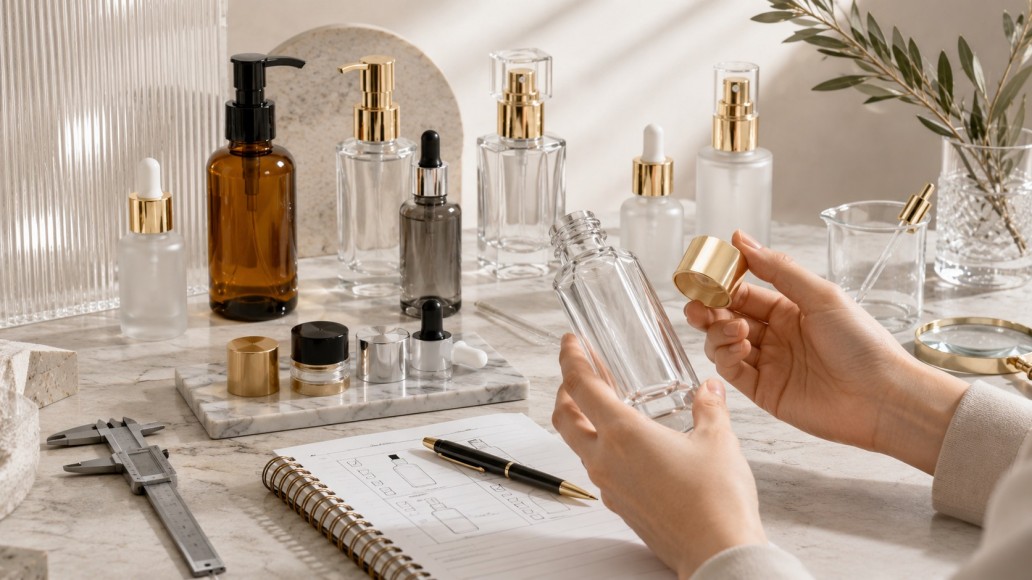
A reliable sourcing process starts with a written packaging brief. Record the formula type, viscosity, target fill volume, dosage, sales channel, decoration, expected order quantity and shelf-life requirements. This allows a glass cosmetic bottles supplier to recommend components based on the project rather than only on appearance.
Bottle and Neck Specifications
Confirm the bottle drawing or written specification before mass production. Important details include nominal capacity, overflow capacity, bottle height and diameter, neck finish or opening dimensions, bottle weight and key tolerances. Small dimensional changes can affect filling lines, labels, cartons and the fit of pumps or droppers.
Keep an approved reference sample for future orders. If the supplier changes a mold, glass weight, neck specification or another key dimension, repeat the relevant fit and performance checks before accepting the change.
Closure, Pump and Applicator Compatibility
Treat the bottle and closure as one system. Confirm thread or crimp compatibility, gasket or liner material, dip-tube length, actuator or dropper fit, dosage where relevant, and how much product can be evacuated at the end of use. A visually matching pump can still leak, loosen or dispense inconsistently if the component specifications are not aligned.
Testing should be completed with the real formula whenever possible. Check leakage, dispensing, torque or closure retention, upright and inverted storage, and the effect of temperature changes that may occur during transport or warehousing.
Decoration and Color
Custom glass cosmetic bottles can use a wide range of visual finishes, but decoration should be approved on the real bottle shape and surface. Curves, mold seams, frosting, coating thickness and color variation can affect artwork appearance. Supply vector artwork, define approved color references, identify the print area and agree on acceptable tolerances before production.
Review both a digital artwork proof and a decorated physical sample when possible. If color matching is important, judge samples under consistent lighting and keep the signed sample or approved color standard as the production reference.
Quality Inspection
Quality inspection should focus on function as well as appearance. Cosmetic defects may include scratches, chips, visible bubbles, uneven coating, print misalignment or color variation. Functional checks can include dimensions, neck finish, closure fit, leakage, pump or dropper operation and packaging integrity.
The acceptance standard should be agreed before production, not after a shipment is complete. Define which defects are critical, major or minor for your project and how samples will be inspected. For repeat orders, retain approved samples and written specifications so quality can be compared consistently over time.
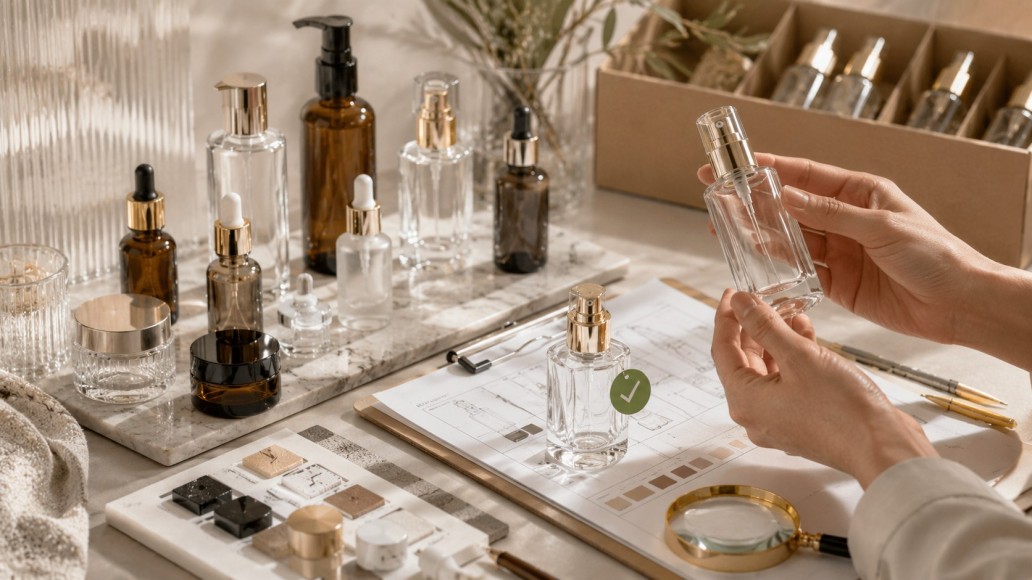
A suitable supplier should be able to explain what is standard, what can be customized and which requirements still need testing. When comparing suppliers, look beyond the unit price and ask how they control the full component combination, decoration and shipment preparation.
For wholesale cosmetic packaging projects, consistent reordering can be as important as the first order. Ask how the supplier manages approved samples, artwork versions, component codes and changes between production batches.
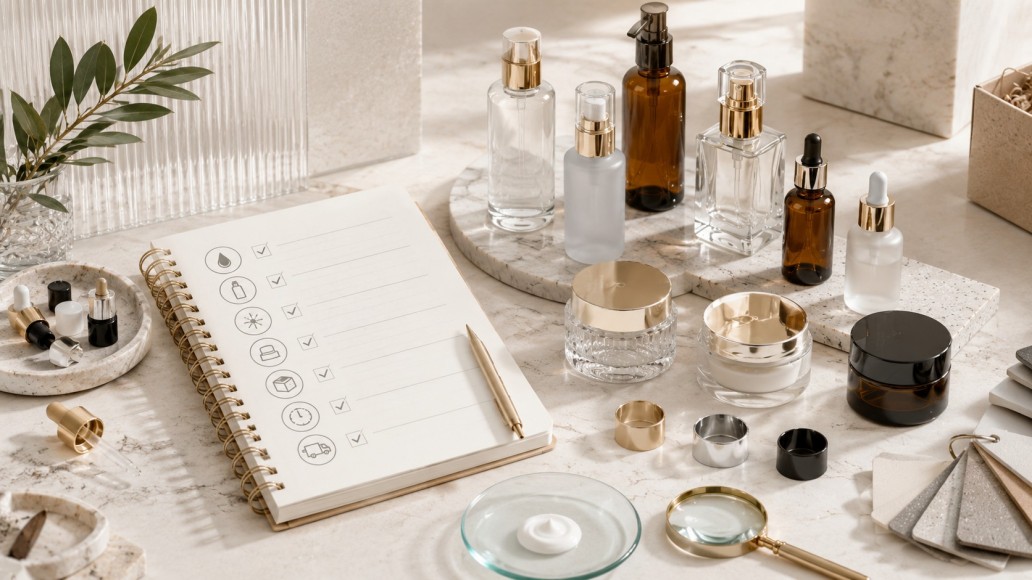
Common Mistakes to Avoid
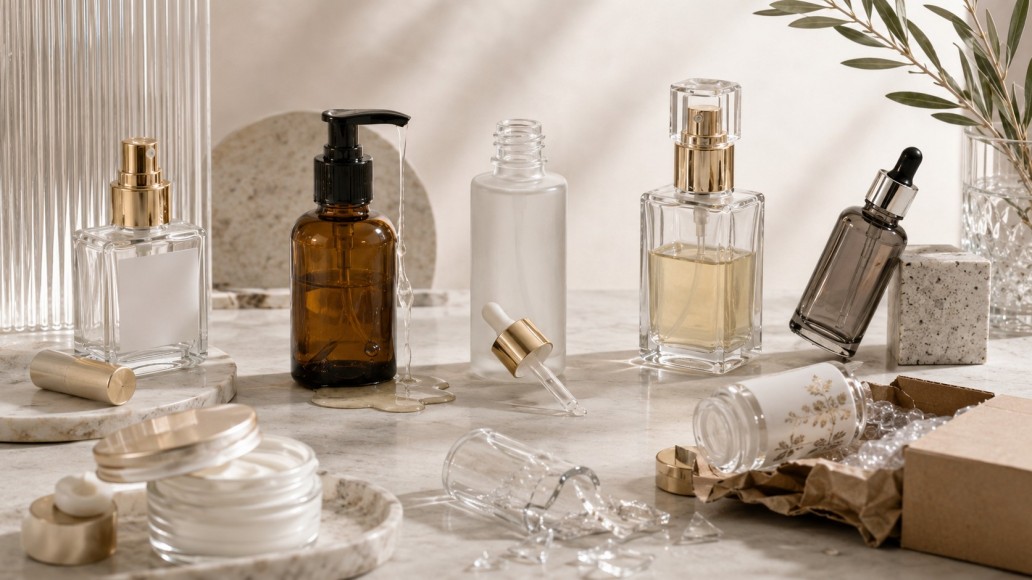
Most of these problems can be reduced by aligning the brand, filler and packaging supplier early. The more complete the packaging brief is, the easier it becomes to compare quotations and avoid changes late in the project.
Are glass cosmetic bottles suitable for serums and facial oils?
Often, yes. Glass is commonly used for these products, but suitability depends on the actual formula and the closure components that contact it. Compatibility and stability testing with the filled package are still required.
Can glass cosmetic bottles be used with pumps and droppers?
Yes. Many stock glass bottles are designed for pumps, droppers or other dispensing systems. The neck finish, gasket, dip tube, dosage and closure fit need to match the bottle specification.
What is the difference between stock and custom glass cosmetic bottles?
Stock bottles use an existing mold and can usually reduce development time and tooling cost. Custom glass cosmetic bottles can provide a more distinctive shape or specification, but they typically require additional development, tooling, sampling, MOQ and lead time.
How do I choose a glass cosmetic bottles supplier?
Compare sample quality, component compatibility, customization options, documentation, quality control, MOQ, lead time, packing method and communication. The best supplier for a project is the one that can consistently meet the approved specification, not simply the one with the lowest quoted unit price.
What should be tested before a wholesale order?
At minimum, evaluate the filled package for formula compatibility, leakage, dispensing, closure retention, decoration durability and transport performance under conditions relevant to the target market.
The best glass cosmetic bottles are not simply the heaviest or most decorative options. A successful package balances formula protection, reliable dispensing, brand presentation, transport safety and a realistic supply plan. Buyers should evaluate the bottle, closure, decoration and shipping configuration as one complete system.
If you are sourcing stock or custom glass cosmetic bottles, prepare a clear brief with your target capacity, formula type, preferred closure, decoration requirements, order quantity and market. Then use representative samples and documented testing to turn an attractive concept into a repeatable production specification.

 Add: No. 21, Lane 10, Yongxing Middle Road, Taihe Town, Baiyun District, Guangzhou, China
 Mobile:+86 -18594043134
 Email: cecilia@huccipack.com
 Whatsapp: +8618594043134


 Apply Free Sample




 Get Free Sample