what are you looking for?
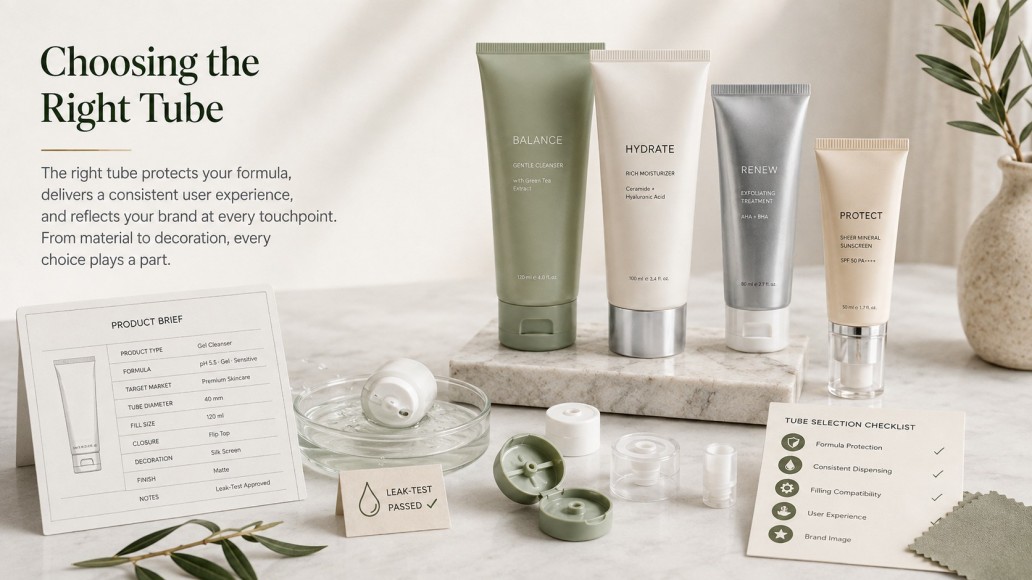
Choosing cosmetic tube packaging is not only a visual decision. The package must protect the formula, dispense consistently, support the filling process and communicate the brand position. A beautiful component that leaks, reacts with the formula or creates an awkward user experience can delay a launch and increase total project cost.
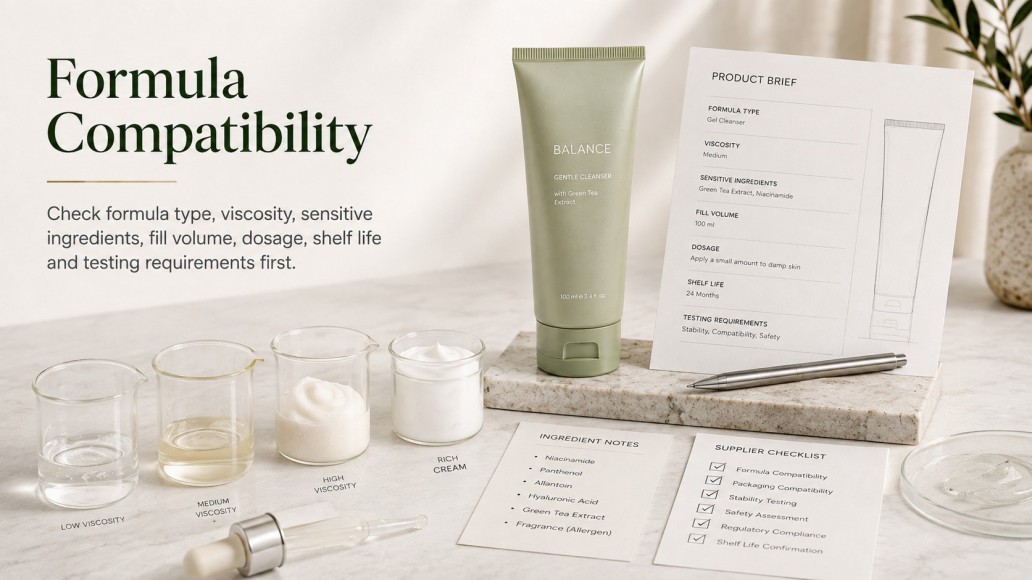
Start with the product brief. Record formula type, viscosity, sensitive ingredients, target fill volume, dosage, sales channel and expected shelf life. These details narrow the practical options before color and decoration are discussed. Ask the packaging supplier which specifications are confirmed and which still require a sample or test
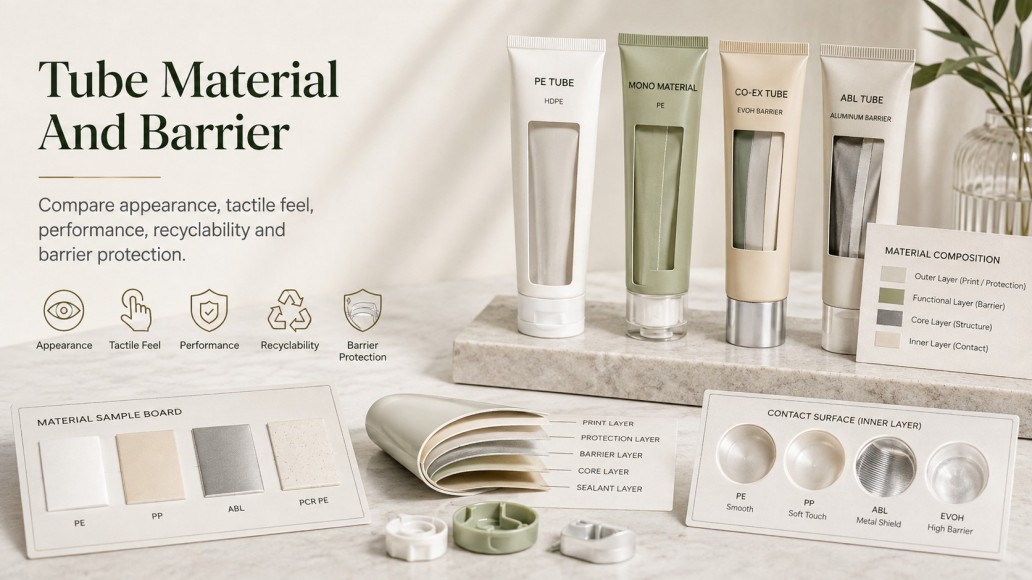
The material or component structure affects appearance, feel and performance.Do not select it from a photograph alone. Compare physical samples under normal lighting, review contact surfaces, and check whether the proposed option fits the intended filling and assembly equipment. Where recycled content or special barriers are requested, obtain written material information.
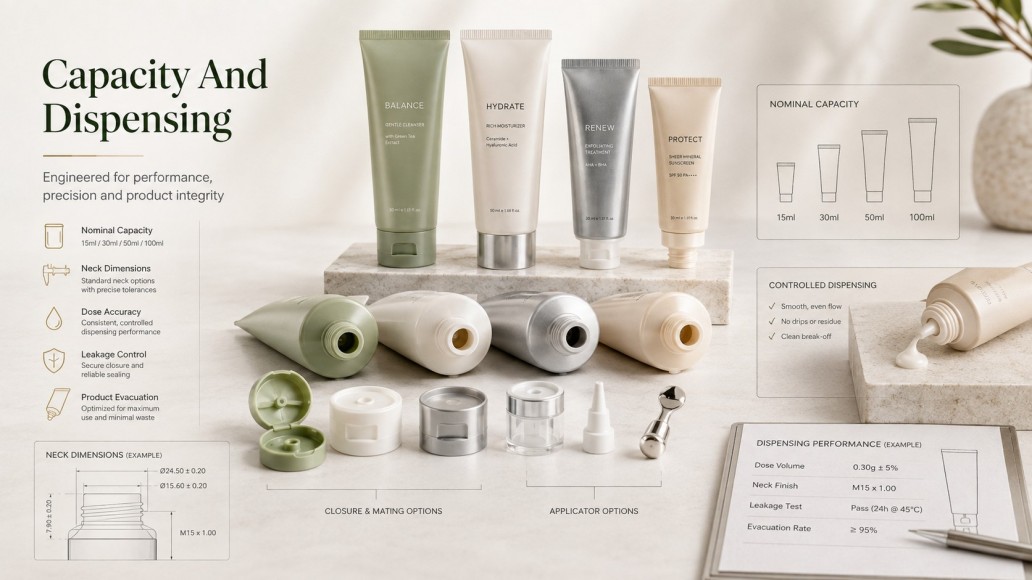
A complete specification should identify every mating part. Confirm neck or opening dimensions, closure fit, liner or gasket, actuator, dip tube or applicator, nominal capacity and overflow capacity where relevant. Small changes can affect torque, leakage, dose or product evacuation, so approved samples should be kept as references.
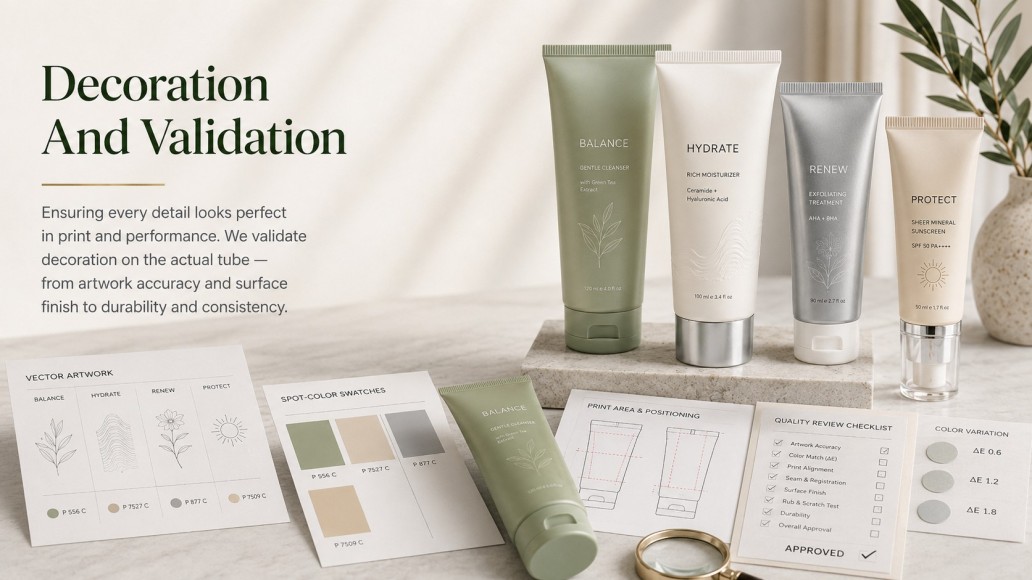
Decoration should be planned on the real substrate and shape. Curves, seams, surface treatments and color variation can change the result. Supply vector artwork, define spot colors or approved color references, identify the print area, and agree on acceptance standards before production. Review both an artwork proof and a decorated physical sample when possible.
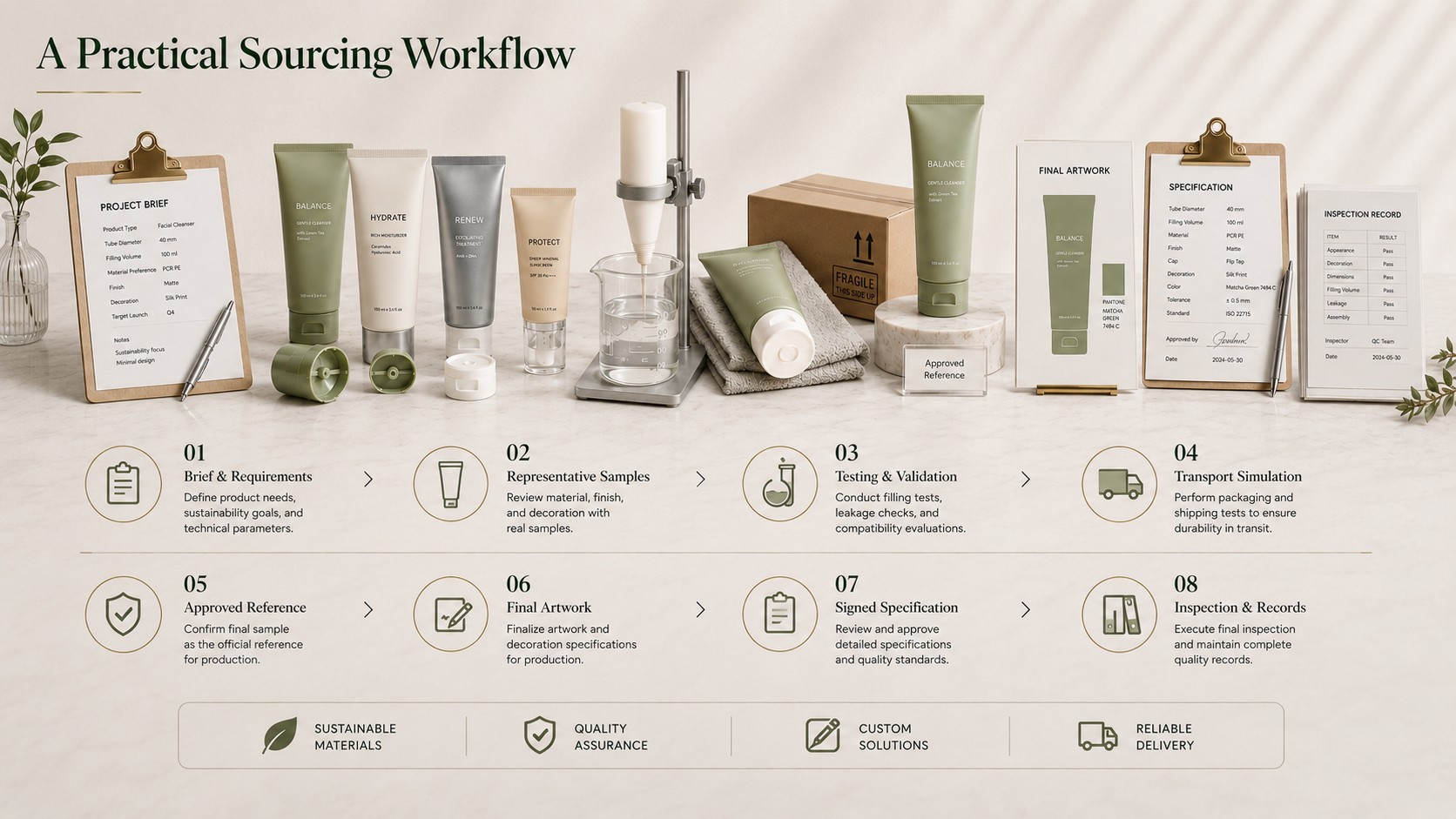
1. Create a written brief and identify must-have versus optional requirements.
2. Request representative samples and confirm the full component combination.
3. Run filling, compatibility, leakage, dispensing and transport tests under conditions relevant to the formula and market.
4. Approve a signed reference sample, final artwork and written specification before mass production.
5. Inspect production against the agreed criteria and retain records for future reorders.
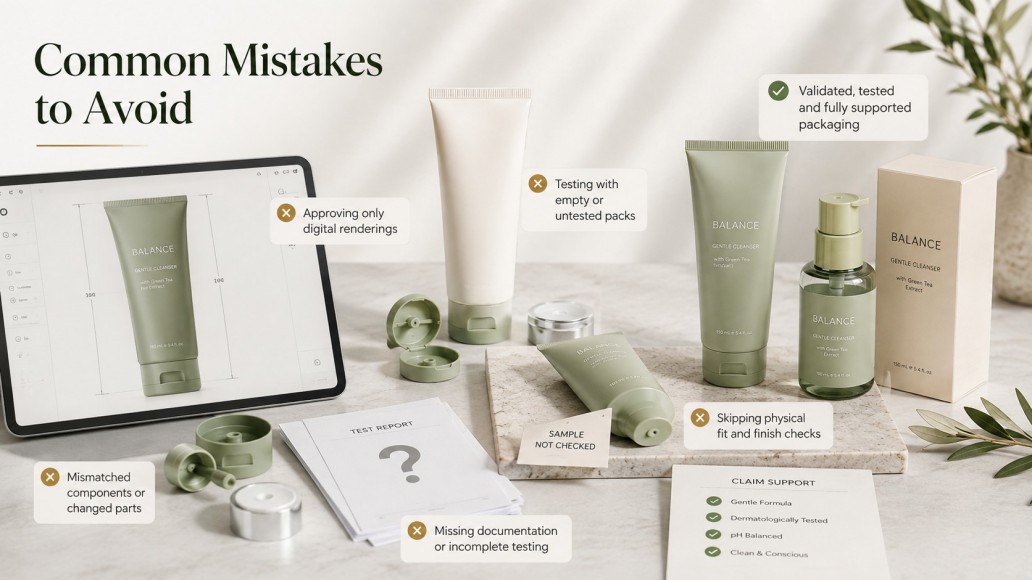
Common mistakes include approving only a digital rendering, testing an empty pack instead of the filled product, changing one component without repeating fit checks, and using environmental or performance claims without supporting documentation. Early alignment between the brand, filler and packaging supplier reduces these risks.
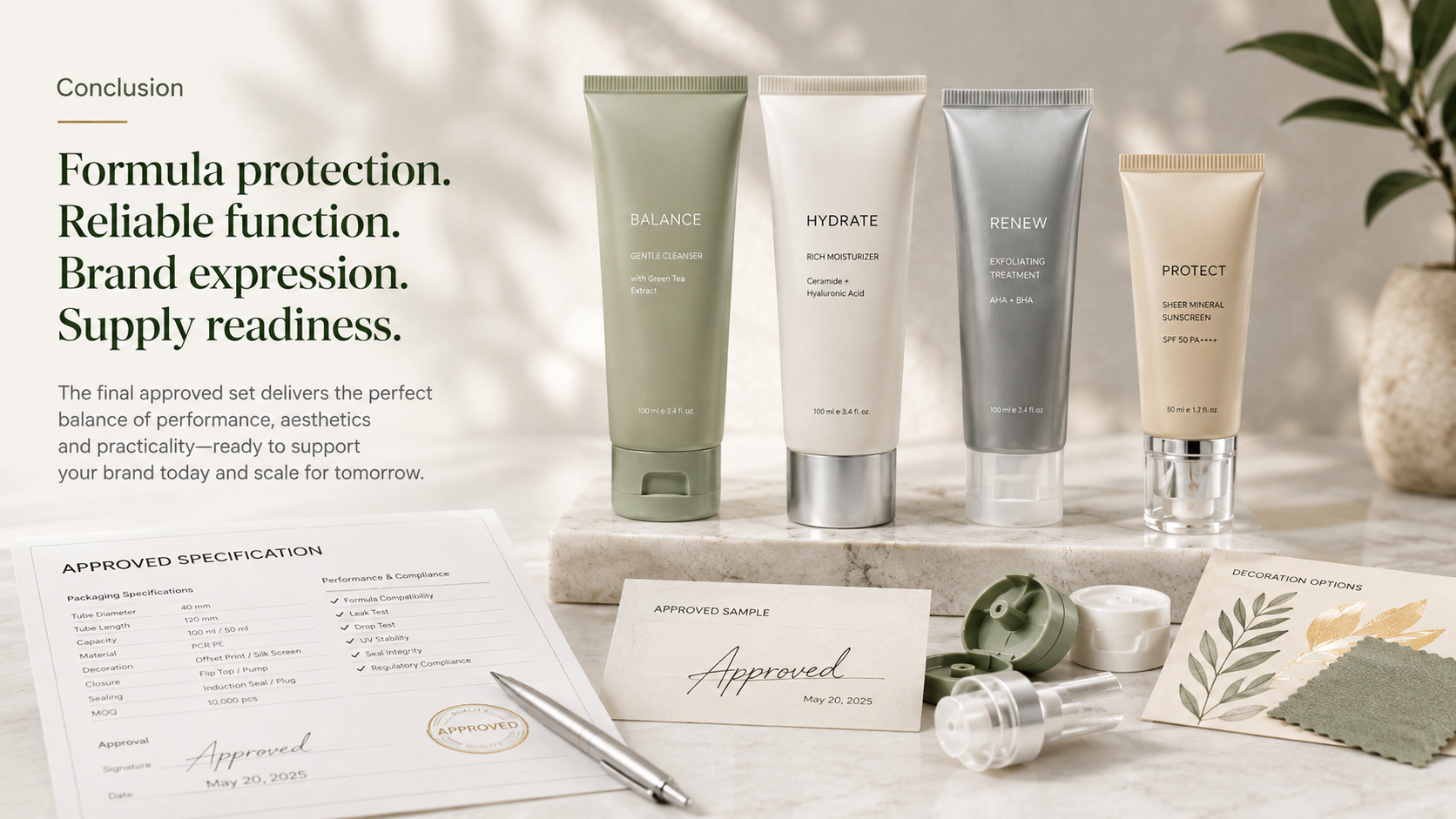
The best cosmetic tube packaging is the option that balances formula protection, reliable function, brand expression and a realistic supply plan. Use samples and documented tests to turn a promising design into a repeatable production specification.
Send us your formula type, target capacity, annual volume and decoration idea. Our team will help you shortlist samples for evaluation.

 Add: No. 21, Lane 10, Yongxing Middle Road, Taihe Town, Baiyun District, Guangzhou, China
 Mobile:+86 -18594043134
 Email: cecilia@huccipack.com
 Whatsapp: +8618594043134


 Apply Free Sample




 Get Free Sample