what are you looking for?
A technical guide for skincare, sun care, cleansing, and personal‑care brands.
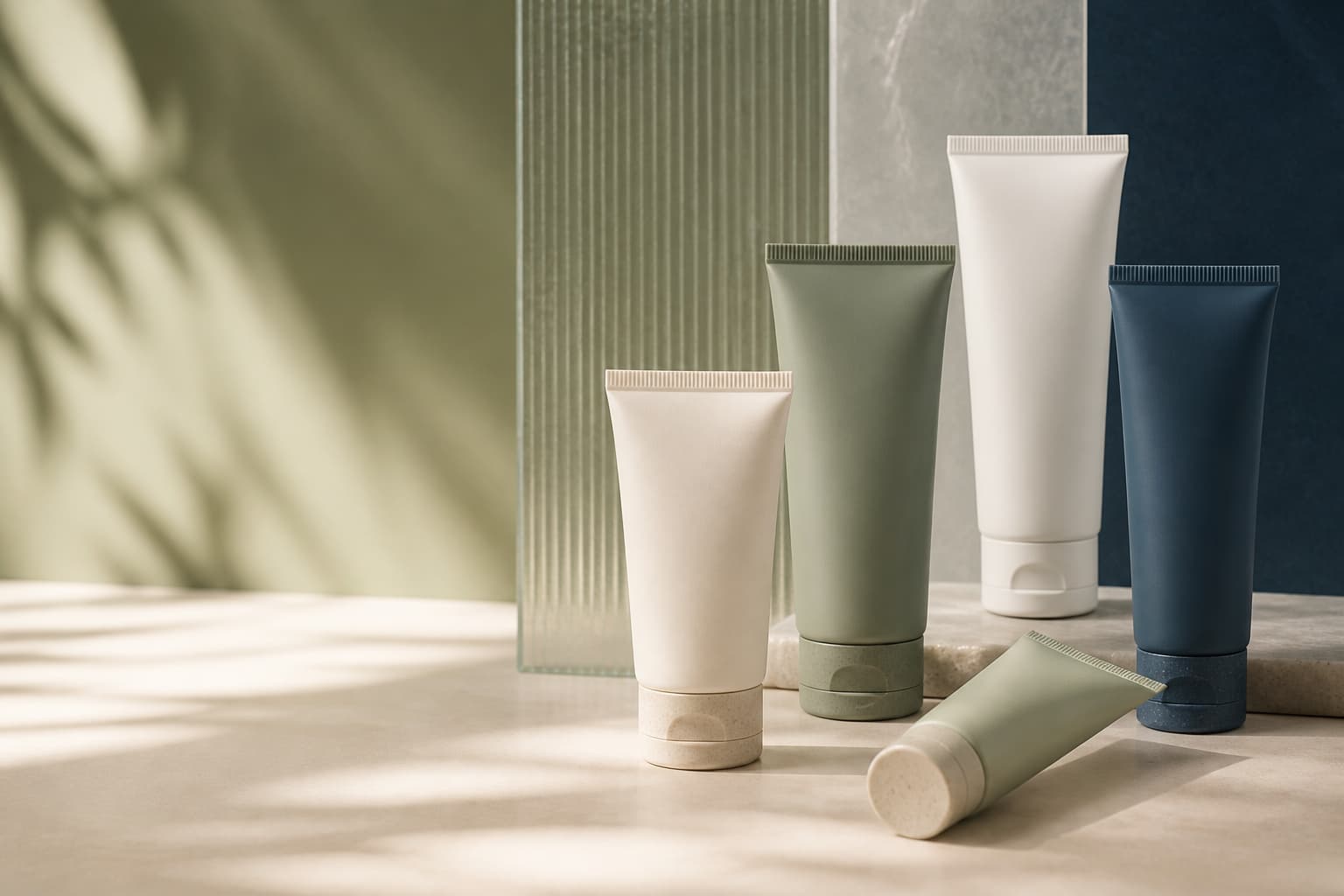
Editorial image: a cosmetic tube portfolio designed around material efficiency, product protection, and responsible packaging development.
For a cosmetic brand, packaging has to perform several jobs at the same time. It must protect the formula, dispense cleanly, communicate the brand identity, withstand filling and transportation, and support the brand's sustainability objectives.
These requirements can sometimes pull in different directions. A structure with stronger barrier protection may contain more layers or a different material combination. A structure designed for easier recycling may require careful review of the formula, decoration, closure, and local collection systems. A lightweight design may reduce material use, but it must still maintain the required stiffness, seal integrity, and consumer experience.
That is why sustainable packaging should be treated as a system design challenge, not as a single‑material decision.
Barrier performance describes how effectively a package helps limit the movement of factors such as oxygen, moisture, light, aroma, or volatile ingredients. The required level depends on the formula and the intended use of the product.
Which tube structure provides the right level of protection with the lowest practical material and process burden for this specific formula and market?
The following comparison is a starting point for product discussions. Final selection should be confirmed through formula compatibility, filling trials, and the relevant technical checks for the target market.
| Tube approach | Typical technical role | Sustainability discussion | Suitable development question |
|---|---|---|---|
| PE extrusion tube | Flexible, versatile tube format for many skincare, haircare, and personal‑care applications | Material selection, wall design, decoration, and closure combination influence the overall footprint | Can the tube achieve the required protection and dispensing feel with an efficient wall design? |
| Plastic barrier laminate | Adds a designed barrier layer within a plastic‑based structure | May support a plastic‑focused packaging strategy, but the full structure and local recycling pathway should be reviewed | Does the barrier layer match the formula sensitivity and intended end‑of‑life route? |
| Aluminum barrier laminate | Designed for demanding protection needs where a strong barrier is required | Material use, layer composition, decoration, and recovery conditions should be assessed together | Is the additional barrier justified by the formula and shelf‑life requirements? |
| PCR‑containing structure | Introduces post‑consumer recycled content into an appropriate tube design | Recycled content, appearance, consistency, supply, and compatibility need technical review | What recycled‑content option can meet the product's visual and performance requirements? |
| Mono‑material PE direction | Seeks a more streamlined material family for the tube system | Recyclability depends on the complete package, local collection infrastructure, and accepted design rules | Can the formula, barrier requirement, cap, decoration, and recovery route work together? |
A note on material claims: Terms such as recyclable, recyclable‑ready, PCR‑containing, and mono‑material should not be used interchangeably. Their meaning depends on the complete package design, technical evidence, local infrastructure, and communication rules of the target market.
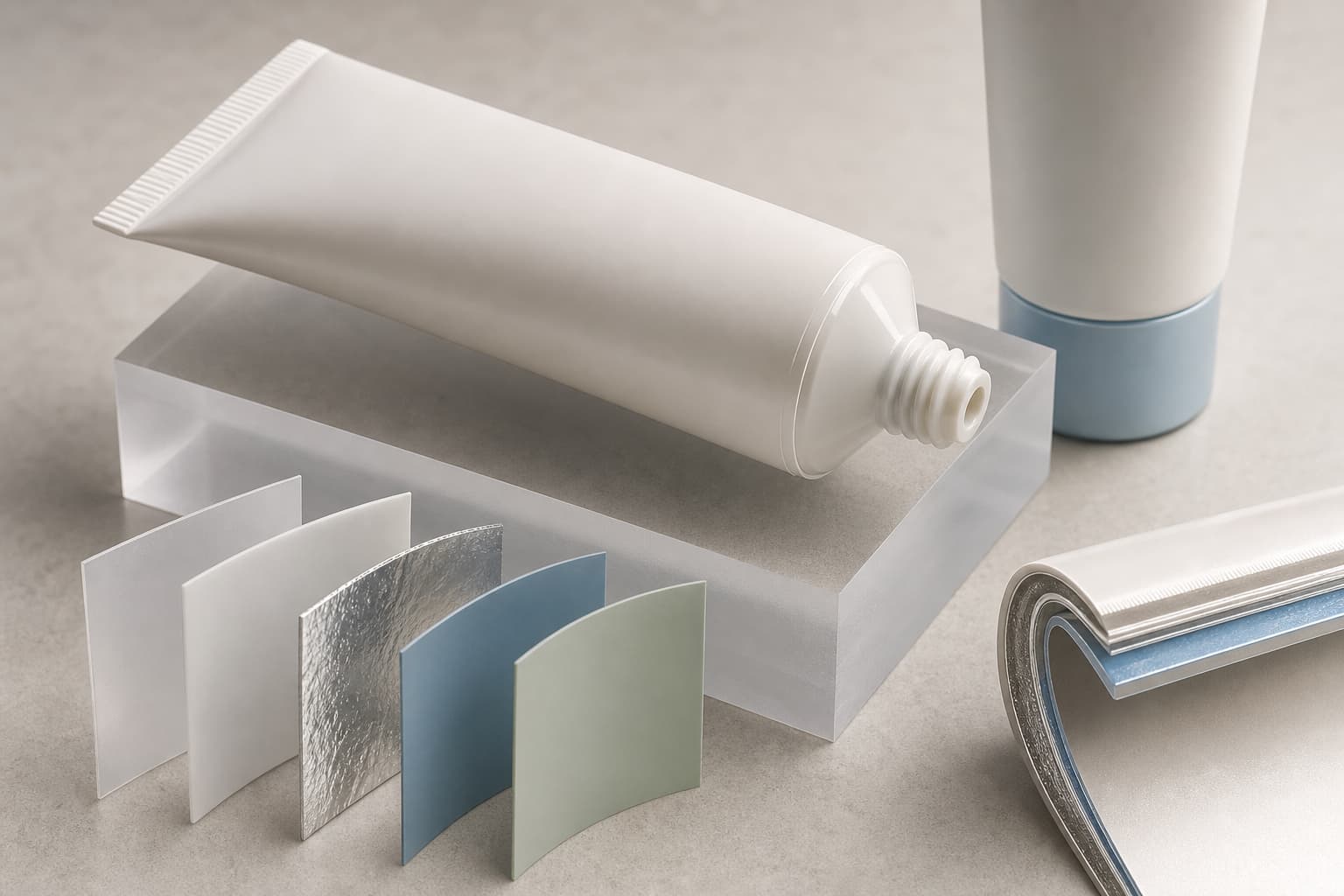
Editorial image: an abstract technical view of cosmetic tube structures and material‑layer design. The image is illustrative and does not represent a specific tube construction.
Define the formula type, viscosity, sensitivity, fragrance profile, active ingredients, filling temperature, and expected storage conditions. A tube should be selected around the product requirements rather than chosen only for appearance.
First identify the protection level the product needs. Then evaluate ways to reduce material use, introduce recycled content, simplify the structure, or improve the recovery pathway without compromising product quality.
The body is only one part of the package. Review the cap, shoulder, nozzle, seal, decoration, coating, adhesive, and any applicator together.
Samples should be evaluated in the intended filling and storage conditions. Useful checks may include visual stability, dispensing performance, seal integrity, deformation, formula compatibility, and transportation simulation.
Keep a technical file that records the selected structure, material description, sample version, test conditions, and approved communication wording.
Face creams, gels, masks, and targeted treatments may require a balance of clean dispensing, formula protection, premium appearance, and convenient handling.
Sun‑care products often require careful attention to formula stability, filling conditions, dispensing behavior, and protection during transportation.
Cleansers, shower products, and body‑care formulas may place more emphasis on squeeze feel, cap usability, leak prevention, and efficient shipping.
Small makeup tubes and targeted applicator formats need precise dispensing and strong visual differentiation. The sustainability discussion should include the applicator, cap, decoration, and practical recovery route for the complete package.
The earlier the packaging supplier joins the discussion, the easier it is to coordinate material selection, tube dimensions, closure design, decoration, and production feasibility.
Sustainable cosmetic tube development is not a choice between performance and responsibility. It is the process of finding the right balance for a specific formula, product category, market, and user experience.
The best starting point is a clear technical brief and an honest review of the complete package system. When barrier requirements, material efficiency, recyclability considerations, decoration, and testing are evaluated together, brands can create tube packaging that is more credible, more practical, and better prepared for long‑term product development.
Planning a new skincare, sun‑care, cleansing, or color‑cosmetic tube? Prepare your formula profile, target capacity, preferred tube diameter, closure concept, decoration direction, and target market for a structured technical discussion.
Suggested CTA: Request a tube structure review and sample discussion from your packaging team.

 Add: No. 21, Lane 10, Yongxing Middle Road, Taihe Town, Baiyun District, Guangzhou, China
 Mobile:+86 -18594043134
 Email: cecilia@huccipack.com
 Whatsapp: +8618594043134


 Apply Free Sample




 Get Free Sample